

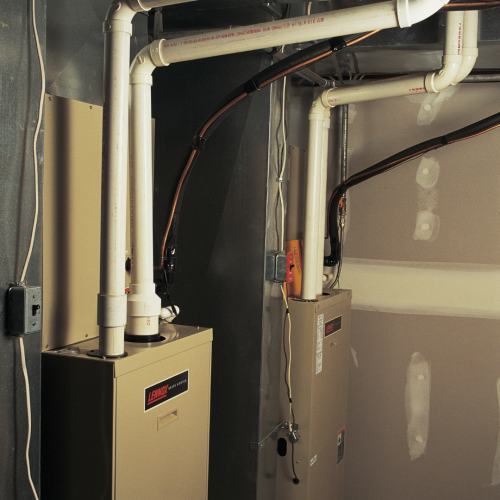
Every fall, our phones start ringing on the same morning. There’s a cold front over the Front Range, thermostats across Highlands Ranch, Parker, Aurora, Centennial, Denver, Greenwood Village, Lakewood, Littleton, Lone Tree, and Castle Rock click over to heat for the first time in months, and a few minutes later homeowners notice a smell. It’s hard to describe. Some people say it’s like a toaster that hasn’t been cleaned. Others say it smells like an iron left on too long.
I’ve been doing this work for over a decade, and the honest answer to whether you should worry is “it depends on the smell.” Most of the time it’s harmless. Sometimes it isn’t. Here’s how to tell the difference, and what we’d do in your shoes.
Why Furnaces Smell the First Time They Run
Your furnace sits idle from roughly May through September. During those months, dust collects on the burners, the heat exchanger, and inside the ductwork. Colorado’s dry air doesn’t help, since it keeps fine dust floating around the house longer than in more humid climates.
When the burners light for the first time, they heat that dust until it scorches. That’s the smell. It’s the same reason a new oven smells funny the first time you use it.
What a Normal Smell Is Like
A normal first-run smell has a few traits:
Dry, dusty, and a little earthy, like warm lint
Strongest within the first few minutes of the cycle
Gone within an hour or two, at most
If that sounds like what you’re noticing, go ahead and crack a couple of windows and let the furnace run. The smell should fade as the dust burns off. You might catch a faint trace again the next day, but it shouldn’t keep coming back all week.
Before you rule everything out, take a quick walk around the house. We’ve found socks, Lego pieces, and even a dog toy sitting on top of floor registers, getting warm. In the utility room, check that nothing like cardboard boxes, paint cans, or laundry is leaning against the furnace cabinet. Fall cleaning tends to pile things up in there.
Smells That Mean Something Is Wrong
Some odors aren’t about dust at all. They’re the furnace telling you a part is failing or something is unsafe. We take these seriously, and you should too.
Burning plastic, rubber, or hot wiring. This sharp, acrid smell usually points to an electrical problem. A blower motor might be overheating, wiring insulation could be melting, or a control board may be failing. Don’t keep running the system to see if it goes away.
Rotten eggs or sulfur. Natural gas has no smell of its own, so utilities add a chemical that smells like rotten eggs on purpose. If you notice it, assume it’s a gas leak.
A sharp chemical or formaldehyde-like odor. This can be a sign of a cracked heat exchanger. The heat exchanger keeps combustion gases separated from the air you breathe, so a crack is a real safety issue. Carbon monoxide itself has no smell, which is why working CO detectors on every level of your home matter just as much as your nose does.
Musty or moldy. Not dangerous in the same way, but a musty smell that lingers often comes from moisture in the ductwork, a neglected humidifier pad, or a filter that’s long overdue for a change.
A burning smell that won’t fade. Even if it smells like dust, an odor that hangs around for hours or returns every time the heat kicks on deserves a closer look. Heavy buildup, a clogged filter choking airflow, or a component running too hot can all cause it.
What to Do, Depending on the Smell
Here’s the plain version of what we tell customers over the phone.
If it smells like dust and it’s fading, open a window, keep an eye on it, and let the cycle finish. Swap in a fresh air filter if you can’t remember the last time you did. This is usually the end of the story.
If it smells electrical, like plastic, or like chemicals, turn the furnace off at the thermostat. If the smell is strong, switch off power to the unit too (most furnaces have a switch that looks like a regular light switch on or near the cabinet). Then call a licensed HVAC technician. Don’t restart it until someone has checked it out.
If it smells like rotten eggs, get everyone out of the house, pets included. Don’t flip light switches, unplug anything, or use your phone until you’re outside. Once you’re at a safe distance, call your gas utility or 911. Once the utility has cleared the house, an HVAC technician can inspect the furnace and gas connections.
How to Keep the First-Run Smell to a Minimum Next Year
You can’t stop dust from settling over the summer, but you can cut down on how much is waiting to burn off. A fall tune-up is the most effective step. During a furnace maintenance visit, we clean the burners, check the heat exchanger for cracks, test electrical connections, and look over the blower motor. That last point matters most. A tune-up is often where we catch the small problem that would have turned into a burning-plastic smell (and a no-heat call) in January.
A few other habits help too:
Change your filter at the start of heating season and every one to three months after that
Run the heat briefly on a mild September afternoon, so the burn-off happens with the windows open
Vacuum supply and return registers before turning on the heat
Keep the area around the furnace clear year-round
When to Call a Pro
If you’re not sure what you’re smelling, it’s okay to call. That’s what we’re here for. Part of our job is telling people “that’s normal, you’re fine,” and we’d much rather do that than have someone ignore a warning sign. If something is wrong, our furnace repair team can track down the source and walk you through your options before any work starts.
Frequently Asked Questions
How long should the burning smell last after turning on the furnace?
Is it safe to sleep with the furnace on if it smells like burning?
Can a dirty air filter cause a burning smell?
Why does my furnace smell like burning every time it turns on, not just the first time?
Does a burning smell mean I need a new furnace?
Usually not. Most smells trace back to dust, a filter, or a single part that can be repaired. Replacement only enters the conversation when there’s a serious issue like a cracked heat exchanger on an older system.
Should I have carbon monoxide detectors if I have a gas furnace?
Not Sure What That Smell Is? Let’s Find Out.
A quick whiff of dust in October is part of living with a furnace. A smell that lingers, burns sharp, or reminds you of rotten eggs is not. When something doesn’t seem right, Fireside Heating & Cooling is here to help. We’re a locally owned, veteran-owned team that provides furnace repair across Littleton, Parker, Castle Rock, Denver, Aurora, Centennial, Greenwood Village, Lakewood, and Lone Tree, with same-day and after-hours service when you need it. We’ll tell you what’s going on, explain your options in plain language, and give you an upfront price before any work begins.
Contact us today to schedule a visit or request your free quote.